I’m excited to share some fun activities that help teach fact and opinion. This skill increases reading comprehension and develops critical thinking. In this post, I’ll share some of my favorite activities, including games, to make learning about facts and opinions both effective and enjoyable. Why Teach Fact and Opinion? So you may be wondering why this skill is important to teach? Students understanding the difference between facts and opinions helps develop higher-level thinking skills. Facts are statements that can be proven true or false, while opinions are personal beliefs or judgments that can’t be proven. Learning to differentiate between the two helps students evaluate the information they encounter throughout their day. Strategies for Teaching Fact and Opinion There are several strategies to teach fact and opinion. In my class, visual anchor charts help the students when unsure if a statement is a fact or an opinion. 1. Introduce definitions Fact: A statement that can be p......
I’m thrilled to share one of my favorite fun educational games with you: Blast of Fun! This game is a huge hit with my third graders, and I want to tell you why it’s such a fantastic addition to any classroom....
What is character analysis? When we read fiction text, we think about the type of characters that are in the text. Characters have different personality traits or character traits, have relationships with other characters, and undergo changes. For students to comprehend the story at a deeper level, we need to teach them to think about characters, notice what the author wants us to see about them, and use that to understand the message of the story. However, this can be a challenge because students have to make inferences using the evidence the author gives us. How do we teach character analysis? It can help to start with a character analysis lesson about differentiating internal traits and external traits. Students sometimes get mixed up and think that the way a character is described physically tells us their personality. Instead of “judging a book by its cover,” we can help students learn that internal traits are the characteristics that define who a character is. Physical......
Teaching students to analyze literary text development can be a rewarding but challenging task. Students at this age are developing their reading and critical thinking skills, and one key standard is to help them determine the theme and understand how it is conveyed through key details in the text. Additionally, retelling stories from diverse cultures, including fables, folktales, and myths, is a great way to foster cultural appreciation and broaden their horizons. In this blog post, we’ll explore engaging and interactive strategies to make teaching these standards a fun and memorable experience for both teachers and students. Storytelling Through Theater Alright, buckle up for this theatrical rollercoaster because we’re about to turn your classroom into a storytelling extravaganza! Let’s sprinkle some creative magic and make those literary stories leap off the page. First up, the “Cultural Collage Play.” Dive into a mix of fables, folktales, and myths from......
One crucial strategy for teaching reading comprehension is to understand and utilize text and graphic features. These elements play a significant role in shaping the way we comprehend and interact with the written word and images. The Significance of Teaching Text and Graphic Features for Reading Comprehension Text and graphic features are like the secret keys to unlocking the world of information. They provide valuable clues that help readers understand and engage with a wide range of texts, from storybooks to informational materials. Why should you teach this strategy? 1. Enhances Reading Comprehension Understanding text and graphic features helps students make sense of the content they’re reading. It provides context, guiding them through complex ideas, new vocabulary, and different writing styles. 2. Promotes Critical Thinking Analyzing these features encourages students to think critically and make connections between the text and visuals. It sparks curiosity and inqui......
Introduction One powerful strategy to bolster reading comprehension is making connections. In this blog post, we’ll explore the importance of making connections when reading and provide a list of engaging books for third graders to use as read-alouds to model this strategy. We’ll also delve into the three types of connections: text to self, text to text, and text to world. Why Making Connections Matters with Reading Comprehension Making connections is like building bridges between a reader’s prior knowledge and the text they’re exploring. It helps students engage with the material on a personal level, making it more meaningful and memorable. Here’s why it’s so important: Enhanced Comprehension: When students connect what they’re reading to their own lives, other books they’ve read, or the world around them, they’re more likely to understand and remember the content. Increased Engagement: Making connections brings reading to life. It ......
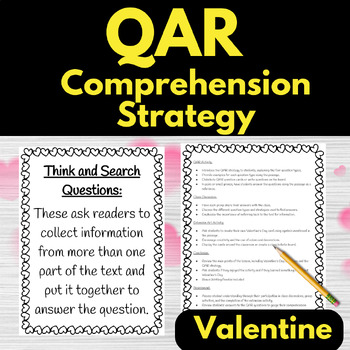
Are your students struggling with reading comprehension? Try the QAR strategy (Question-Answer Relationships)! This technique helps students understand what type of question is being asked and where to find the answer in the text. Let’s dive into what the QAR strategy is, its benefits, and how to teach it effectively. What is the QAR Strategy? The QAR strategy is a reading comprehension method that categorizes questions into four types: Right There Questions : Answers are found directly in the text, often in a single sentence. Think and Search Questions : Answers are gathered from several parts of the text and combined. Author and You Questions : Answers require students to use information from the text and their own experiences or prior knowledge. On My Own Questions : Answers rely on students’ own experiences and knowledge, independent of the text. This classification helps students recognize the relationship between questions and where to find their answers, enhancing their un......
Introduction As educators, we are always on the lookout for effective strategies to enhance our students’ reading comprehension skills. Amidst the myriad of techniques available, one powerful tool stands out: read-alouds. This practice not only fosters a love for literature but also plays a pivotal role in advancing reading comprehension abilities. In this article, we’ll delve into why read-alouds are an indispensable part of reading comprehension instruction and how they are firmly grounded in the science of reading. The Art of Read-Alouds Read alouds are a shared experience where educators read a selected text aloud to their students. These texts vary in complexity, catering to the age and reading level of the learners. While read alouds do entertain and engage, their true value lies in the educational benefits they offer. The Importance in Reading Comprehension Vocabulary Enrichment : Read-alouds introduce students to a rich vocabulary beyond their daily conversations. Th......
Subscribe to:
Posts (Atom)